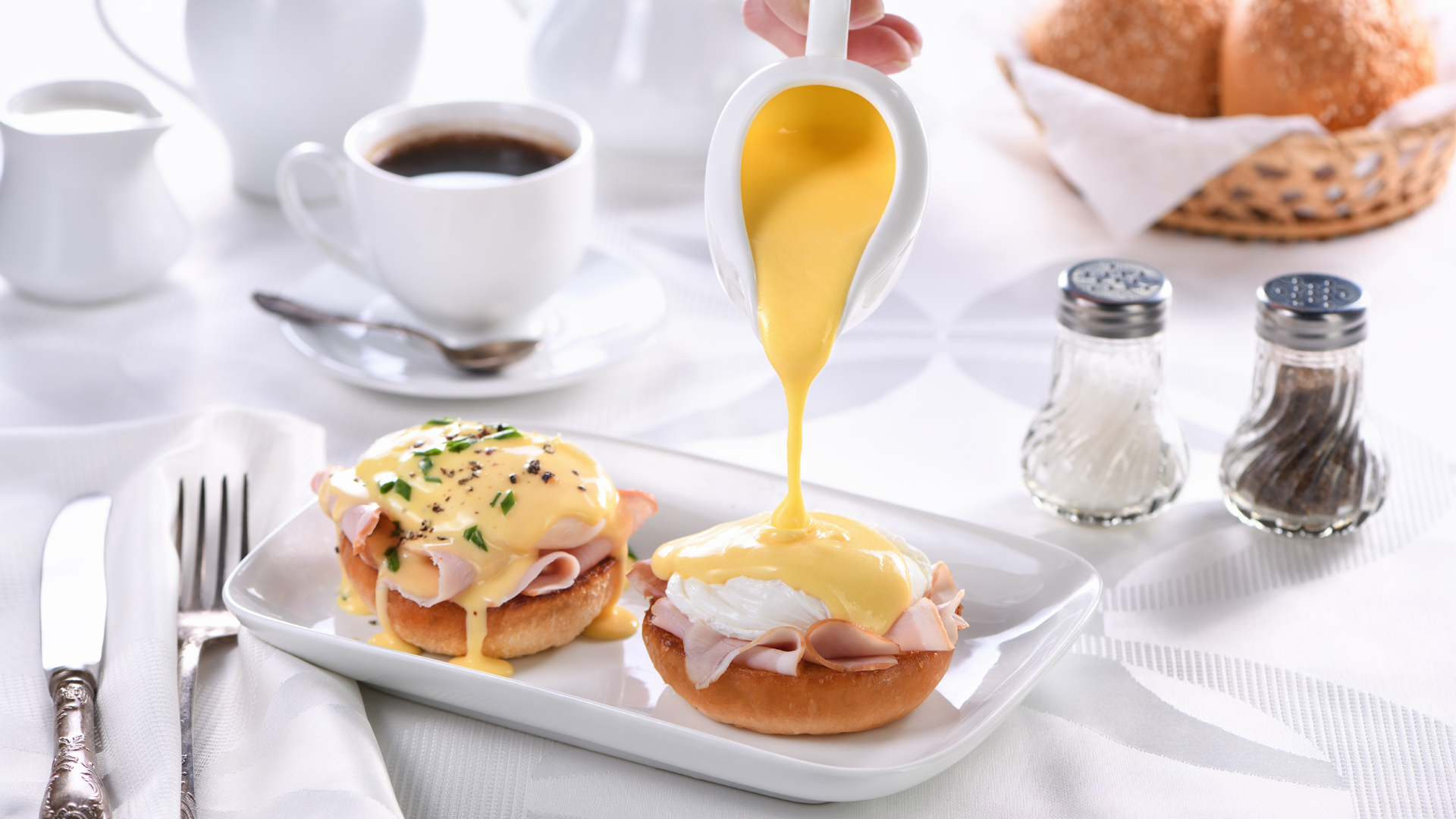
Hollandaise is the ultimate test of your emulsification game. Built on butter, egg yolks, and lemon juice, it’s the sauce that demands precision, patience, and a little finesse with heat control. When done right, it transforms into a velvety, rich sauce that showcases your mastery of the fundamentals.
In this module, you’ll kick things off with an in-depth audio podcast that dives into the world of Hollandaise. Then, a three-part video series breaks down the science of emulsions, plus technique videos on classic beurre blanc, stabilized beurre blanc, and one of my personal favorites, sauce vierge. We’ll also take a close look at mayonnaise—its structure, its many variations, and how it serves as a base for some of your favorite sauces, from tartar and aioli to classic dressings like ranch, blue cheese, and Louie.
By the end, you’ll not only master Hollandaise but also build the confidence to tackle more advanced sauces with ease.
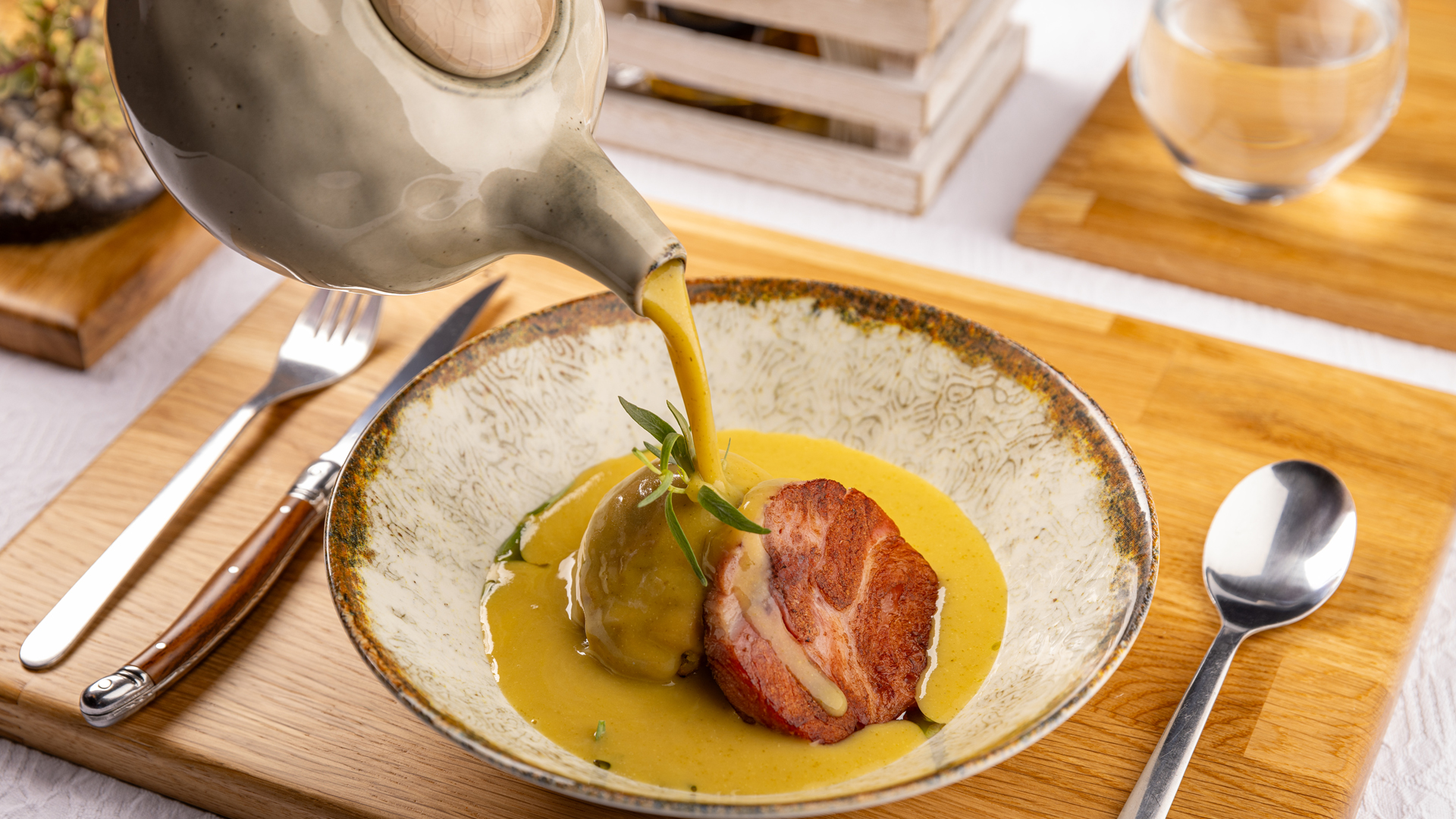
Velouté—French for “velvety”—is one of the five mother sauces in classical French cuisine, and for good reason. Built from a light stock (chicken, fish, or veal) thickened with a blond roux, it’s a masterclass in extracting flavor and achieving the perfect texture.
At its core, Velouté is about balance. The stock provides depth, while the roux adds body without overpowering. It’s delicate, neutral, and endlessly adaptable—serving as the backbone for countless secondary sauces, from Suprême to Allemande.
But don’t let its simplicity fool you. A great Velouté demands precision. The stock needs clarity and richness, the roux must be cooked just enough to lose its raw flour taste without darkening, and the final sauce should coat a spoon with a silk-like consistency.
Master Velouté, and you unlock the potential for an entire family of sauces. Ignore the details, and you end up with something dull, pasty, or worse—gluey. Like all great French sauces, it’s a test of technique, but once you nail it, the payoff is huge.
Welcome to the BÉCHAMEL MODULE—the next step in mastering the essential building blocks of classic French cuisine. At first glance, Béchamel, often called a “white sauce,” looks straightforward: milk, thickened by a simple white roux of butter and flour. But that’s exactly why it’s fundamental. Mastering Béchamel is about understanding precision, timing, and control—skills that separate competent cooks from truly skilled ones.
Yet the real value of Béchamel extends beyond its pure form. This single sauce opens doors to a wide array of derivatives—like Mornay, enriched with Gruyère and Parmesan, or Soubise, built on the sweetness of slow-cooked onions. These variations highlight a key principle in French cooking: even humble ingredients, when handled with care and technique, can elevate a dish from ordinary to exceptional.
Before diving into the articles, demonstration videos, and recipes, start by listening to the podcast in the first lesson of this module. It’s the best way to grasp the deeper context, the “why” behind the methods, and the culinary science that makes Béchamel a cornerstone sauce.
Mastering Béchamel isn’t about adding another recipe to your collection—it’s about unlocking fundamental skills that will refine your entire approach to sauces.
Sauce Tomat, more commonly known as tomato sauce, is a cornerstone in diverse culinary traditions. Made primarily from tomatoes, often with added herbs and seasonings, it presents a vibrant base that can stand alone or be transformed. Integral to Italian pastas, French stews, and many global dishes, its versatility is unmatched. The essence of Sauce Tomat lies in the extraction and concentration of flavors, often through simmering. For chefs, mastering this sauce means understanding the balance of acidity and sweetness inherent in tomatoes.
Espagnole sauce, central to French cooking, stands as a foundation for many of the world's richest sauces. Composed of brown stock, tomatoes, and a brown roux (a mixture of flour and fat cooked until it's dark), this sauce embodies the depth achievable through slow cooking. Its significance transcends its own rich flavor; Espagnole is a precursor to other beloved sauces like demi-glace and Bordelaise. Grasping Espagnole is crucial for chefs, as it teaches the art of layering flavors and reducing liquids for concentration. In the realm of sauces, Espagnole is a masterclass in achieving complexity through simplicity.